Blue Tiger Eye Stone Meaning: A Buyer’s Guide to Jewelry, Authenticity, Price, and Wholesale Quality
Written by: Rocrystal Team, Last Update Time: December 21, 2025
Quick Facts (Specs at a Glance) + What This Guide Covers
What quality looks like
If you’re shopping for quality, start with the basics behind Blue Tiger Eye Stone Meaning: a quartz-based stone with a silky, moving “cat’s-eye” band (chatoyancy). Colors usually run from deep steel-blue to blue-gold mixes, with a trigonal crystal structure and about 7 on the Mohs scale—durable for everyday wear. In listings you’ll also see hawk’s eye or falcon’s eye. For bracelets and pendants, prioritize strong banding, smooth polish, and clean drill holes. If you’re searching “blue eye stone meaning,” start with those specs first.
Most buyers eventually ask, “Where is Blue tigers eye found?” In the gem trade, it’s commonly sourced from regions in Southern Africa (often associated with South Africa and Namibia), with additional material also marketed from places like Brazil, India, and elsewhere depending on the supplier’s pipeline. Because color and chatoyancy can vary by deposit—and even by lot—treat origin as a batch-level detail, not a guarantee of uniform look. When evaluating Blue Tiger Eye Stone Meaning pages for shopping, look for real batch photos/videos and consistent grading notes.
Who it’s for: retail + wholesale
This guide is written for two types of shoppers: everyday buyers who want blue tigers eye jewelry that looks great and holds up, and store owners who need reliable specs for restocking. If you’re buying retail, you’ll learn what to look for in banding, polish, and comfort—especially for bracelets and pendants. If you’re buying wholesale, you’ll see how Blue Tiger Eye Stone Meaning content connects to real-world decisions like grading, batch consistency, and how to avoid “too-good-to-be-true” lots.
Want current lots, real photos/videos, and best-selling bead sizes for your market? Message us on WhatsApp for fast recommendations, or use the inquiry form if you prefer a formal quote with lead time and packaging options. We can suggest a starter mix based on your budget (bracelets, pendants, or sets), plus what to ask for to verify quality before you commit. If you’re building product pages around Blue Tiger Eye Stone Meaning, having batch visuals and clear specs upfront helps conversions and reduces returns.
Quick Facts (Specs at a Glance) + What This Guide Covers
Quick specs buyers care about (not mystical claims)
When people search Blue Tiger Eye Stone Meaning, they’re usually looking for a simple explanation they can use for a purchase decision or a gift note—not a long spiritual lecture. In plain terms, this stone is commonly associated with calm focus, clear communication, and staying steady under pressure (think “keep your head clear” energy). You’ll also see it called hawk’s eye or falcon’s eye in catalogs, which is why “Blue eye stone meaning” shows up in searches too. Treat the meaning as symbolism and personal intention, not medical advice.
You’ll also see Golden blue tiger eye stone meaning mentioned in shops because many pieces show both tones in the same stone—blue bands mixed with warmer gold or amber streaks. In product terms, it’s best described as a visual “blend” rather than a separate gemstone category, and it doesn’t automatically mean higher quality. What matters more is how strong and clean the chatoyant band looks under light, plus the overall polish and color consistency within the piece. When explaining Blue Tiger Eye Stone Meaning to customers, keep it grounded: symbolism, style, and the intention they want to carry—not exaggerated promises.
How to describe it in product copy (gift/retail-ready)
For a product page or gift note, keep the language simple and specific: “a stone people associate with steady confidence, calm focus, and clear self-expression.” That wording fits most shoppers without drifting into big spiritual claims. You can also describe the look—“silky blue bands with a moving cat’s-eye sheen”—to connect the story to what they’ll actually see when they open the package. If you include Blue Tiger Eye Stone Meaning, place it once in the first meaning paragraph, then let the rest of the copy lean on natural variations like “blue tiger’s eye meaning” to avoid repetition.
For bracelets specifically, Blue tiger eye stone meaning often comes down to “wearable reminder” language—something you can glance at during the day. A clean line you can use is: “Chosen for its calm, focused vibe and the way its shifting bands catch the light.” If you sell multiple bead sizes, tie the story to the style: smaller beads feel subtle and office-friendly, while larger beads highlight the chatoyancy and make the bracelet more of a statement piece. Keep claims modest, and let the craftsmanship and visuals do most of the selling.
Science & Origin (Buyer-Friendly, Not Overly Technical)
What it is: hawk’s eye, tiger’s eye, and the “blue stage”
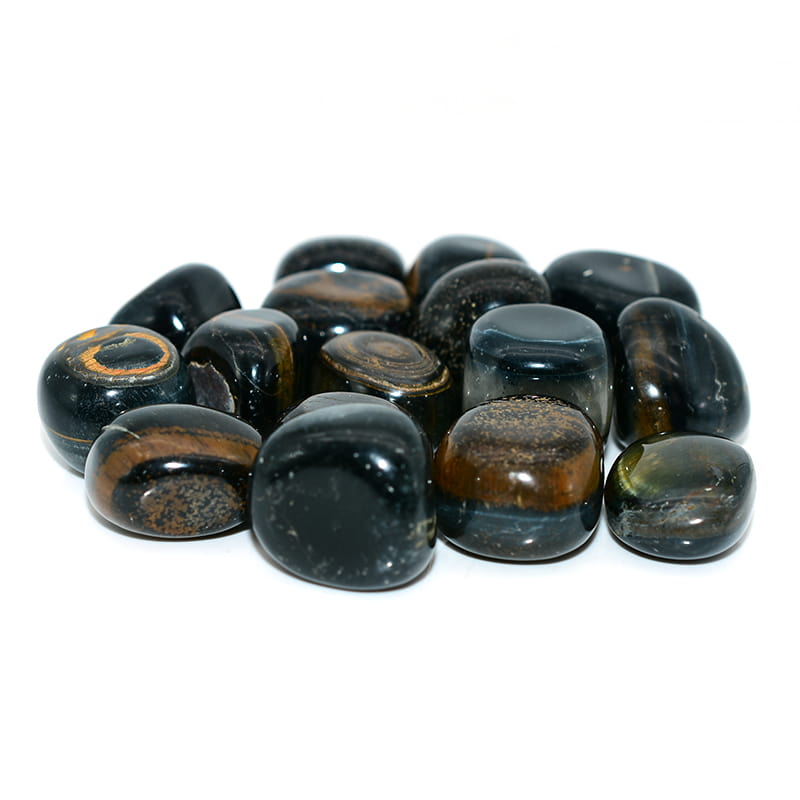
In the trade, blue tiger’s eye is often listed alongside hawk’s eye (or falcon’s eye) because they’re closely related varieties in the tiger’s eye family. A simple way to think about Blue Tigers Eye vs Tigers Eye is “blue-first vs gold-first”: the silky banding and cat’s-eye sheen come from the same fibrous structure, but the color shifts as the material changes over time. That’s why some pieces show both blue and warm gold streaks. For buyers, Blue Tiger Eye Stone Meaning should match what you can see under light.
Some sellers call this mix the Golden blue tiger eye meaning look, but it’s better treated as a color description than a separate “type.” In practice, mixed-color pieces can be great for jewelry because they pair easily with both silver and gold-toned findings. Quality is still determined by the basics: a strong, clean chatoyant band, even polish, minimal distracting fractures, and consistent color across the strand or pendant. When you present Blue Tiger Eye Stone Meaning on a product page, a clear photo/video under moving light will do more than any dramatic wording.
Where it’s found and why batches can look different
Shoppers often ask, “Where is Blue tigers eye found?” In the market, suppliers commonly associate it with Southern Africa (especially material traded from South Africa and Namibia), and you may also see lots offered from Brazil, India, and other regions depending on distribution and labeling. What matters for purchasing is that origin doesn’t guarantee a uniform look—two batches can differ in depth of blue, the amount of golden streaking, and how “sharp” the cat’s-eye band appears. For Blue Tiger Eye Stone Meaning pages, ask for batch photos/videos.
Even within the same supplier, batch variation is normal: some lots lean steel-blue and “smoky,” while others show more blue-gold contrast or slightly softer banding. Lighting also changes how intense the chatoyancy looks, so compare stones under both natural and indoor light before you approve a bulk order. If you’re stocking bracelets, check strand-to-strand consistency (bead size, polish, drill alignment). For pendants, look for centered banding that “moves” across the face. This is where Blue Tiger Eye Stone Meaning meets real quality control.

Jewelry Buying Guide (Bracelet, Pendant, Sets)
Bracelet checklist: bead size, luster, and banding
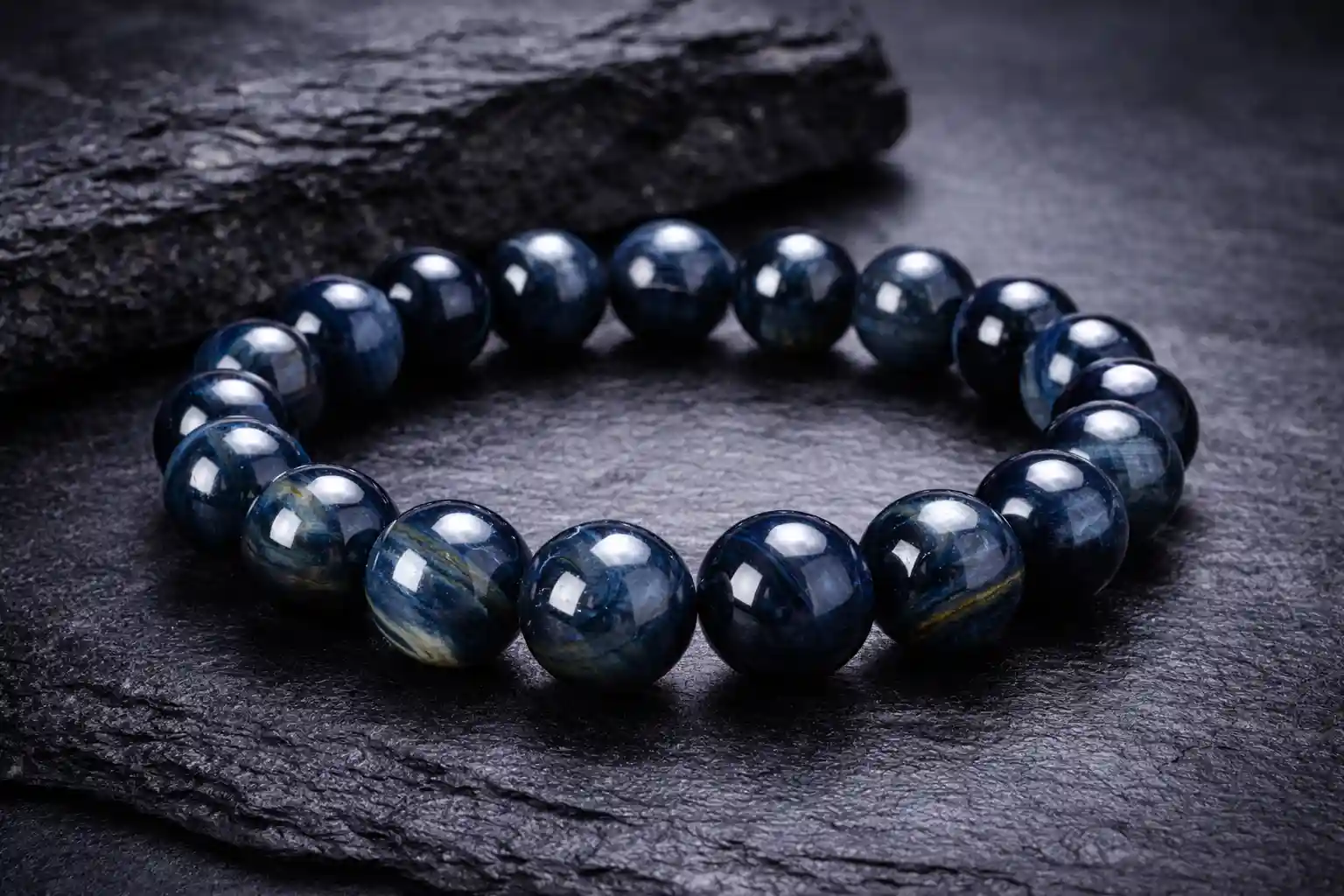
For shoppers comparing Blue Tiger Eye Bracelet benefits, the most practical “benefit” is wearable style plus an easy daily reminder—so quality matters. Start with bead size (6–8mm tends to feel subtle; 10–12mm is more statement), then check for a crisp chatoyant band that shifts as you move the bracelet under light. Beads should be evenly polished, with consistent color across the strand and clean, centered drill holes (no chipped edges). This is where Blue Tiger Eye Stone Meaning connects to what customers actually see and wear.
For many buyers, Blue tiger eye bracelet meaning is easiest to explain as “calm confidence you can keep on your wrist.” You don’t need grand claims—tie the story to the visuals: the moving band can act like a small reminder to pause, refocus, and communicate clearly. If you’re selling multiple sizes, match meaning to use: smaller beads for everyday work wear, larger beads for a bold look that highlights the cat’s-eye effect. Keep Blue Tiger Eye Stone Meaning as symbolism, not a promise.
Pendant & jewelry: what sells (and what to avoid)
For a blue tigers eye pendant, look for a face that shows the banding clearly across the center—this is what makes the stone “come alive” in photos and in real life. A good pendant has smooth edges, an even polish, and a chatoyant band that travels when you tilt it under light. Avoid pieces with dull, flat color, heavy surface scratches, or banding that’s pushed off to one side (it won’t read well in product shots). If you want Blue Tiger Eye Stone Meaning to convert, pick pendants that perform on camera.
For broader blue tigers eye jewelry assortments—bracelets, pendants, rings, and simple bead strands—consistency is what protects your margins. Try to keep one “everyday” grade for budget buyers and one “premium” grade with stronger chatoyancy for higher AOV. Also pay attention to metal pairings: cooler, steel-blue pieces look sharp with silver-toned findings, while blue-gold mixes often sell faster in gold-toned settings. When writing listings, mention Blue Tiger Eye Stone Meaning once, then lean on visuals, specs, and craftsmanship to do the heavy lifting.
Wholesale assortment idea (bracelet + pendant as a set)
A simple way to lift conversion is to offer a small set: one bracelet plus a matching pendant, packaged with a short meaning card and care note. Sets work well because customers can “wear and gift” from the same story, and you can merchandise them as a coordinated look without adding new photography angles. For wholesale orders, build sets around a consistent blue tone and banding strength so the pairing looks intentional. If you’re organizing collections around Blue Tiger Eye Stone Meaning, sets let you tell one story across multiple SKUs.

Benefits Customers Ask About (Keep It Grounded)
“Benefits” framed as daily use, not medical claims
When shoppers ask about Blue Tiger Eye Bracelet benefits, keep the answer practical: most people like it for the look (that shifting band) and for the personal symbolism they attach to it—staying steady, thinking clearly, and speaking with confidence. Those are “benefits” in the sense of daily mindset and style, not medical outcomes. In jewelry listings, connect the story to real details customers can verify: comfortable fit, durable polish, and banding that shows up in photos. That’s a safer, more trustworthy way to explain Blue Tiger Eye Stone Meaning.
A useful way to set expectations is to describe the stone as a “visual cue” rather than a cure. Some customers enjoy wearing it during work, study, or travel because the cat’s-eye shimmer is noticeable and easy to associate with focus or calm. Others simply want a blue-toned piece that pairs with denim, neutrals, and business outfits. If you’re selling in volume, you’ll get fewer disputes when you present Blue Tiger Eye Stone Meaning as symbolism and style—then back it up with clear photos, specs, and straightforward care instructions.
Communication, focus, and confidence—how to word it safely
For product copy, aim for language that feels supportive but stays realistic: “often chosen to represent calm focus,” “associated with clear self-expression,” or “a reminder to slow down and think clearly.” That framing fits the throat-chakra/communication angle many buyers expect, without making unverifiable claims. You can also tie it to real-world moments—presentations, interviews, or busy days—where someone wants a confidence cue. Used this way, Blue Tiger Eye Stone Meaning becomes a personal statement, not a guarantee.
If you include any wellness wording, add a simple boundary sentence so you don’t drift into medical territory: “These descriptions reflect traditional symbolism and personal use, not medical advice.” That one line protects trust and keeps the tone professional—especially for wholesale customers who need compliant listing copy. From there, return to tangible details: chatoyancy strength, polish quality, and bracelet comfort. Those are the factors that actually drive reviews and repeat orders, and they support the story behind Blue Tiger Eye Stone Meaning without exaggeration.

Blue Tiger’s Eye vs Classic Tiger’s Eye (Decision Guide)
Side-by-side differences buyers notice
If you’re deciding between the two, Blue Tigers Eye vs Tigers Eye usually comes down to color mood and styling. Blue tiger’s eye tends to read cooler and more understated—great with silver tones, dark outfits, and modern minimalist looks—while classic golden tiger’s eye feels warmer and more traditional. Both can show strong chatoyancy, but the “wow” factor depends on band clarity and polish more than the color itself. For shoppers comparing stories, keep Blue Tiger Eye Stone Meaning focused on symbolism and the look they prefer.
In listings, you’ll sometimes see the Golden blue tiger eye meaning phrased as a “best of both” option because the mixed tones pair easily with different metals and wardrobe palettes. From a merchandising standpoint, it can also reduce decision friction: customers who can’t pick between blue and gold may choose the blended look. Still, treat it as a color presentation, not a separate grade. A lower-quality mixed stone will still look flat, while a high-quality blue or gold piece with crisp banding will outsell it every time—even when describing Blue Tiger Eye Stone Meaning.
Who tends to buy which (retail positioning)
For gifting, blue-toned pieces often appeal to shoppers who want something calm, modern, and a little less flashy, while golden tiger’s eye is a go-to for classic “protective talisman” style language and warm color lovers. If you’re building a collection, consider offering both as a small color story: “cool blue” and “warm gold,” plus one mixed strand as a bridge. This makes upsells easy without confusing the customer. In your copy, mention Blue Tiger Eye Stone Meaning once, then guide them with style cues and clear photos.
Real vs Fake (Authenticity + Supplier Proof)
Common fakes and “too cheap” red flags
When buyers search Blue tiger eye Real vs fake, it’s usually because prices online swing wildly. The most common issues are dyed material, glass/resin imitations, and low-grade stones marketed with heavily edited photos. A real piece should show a natural-looking band that shifts under light, not a printed pattern or a flat, painted stripe. Also watch for “too perfect” uniformity across every bead—natural stones vary slightly. If you’re selling based on Blue Tiger Eye Stone Meaning, authenticity is the foundation of trust.
A quick red flag is a dull surface with no real chatoyancy: if the “sheen” doesn’t travel when you tilt the stone, it may be imitation or extremely low grade. Another warning sign is color that looks unnaturally neon or overly even—especially if the seller can’t provide a simple video under moving light. For wholesale, treat any ultra-cheap quote as a prompt to ask more questions, not a bargain. Protecting your brand starts with verifying the material behind Blue Tiger Eye Stone Meaning before you scale.
Easy checks customers can do (non-destructive)
To evaluate authenticity at home, start with movement: hold the stone under a single light source and tilt it slowly. A genuine piece should show a distinct “cat’s-eye” band that slides across the surface rather than staying fixed. Next, look for natural banding depth—subtle variation in tone is normal, while perfectly identical stripes can suggest printing or coating. Finally, check the polish and edges: real stones can be well-finished, but they shouldn’t look like plastic. These steps support trust in Blue Tiger Eye Stone Meaning without needing any destructive tests.
For bracelets, inspect drill holes and stringing: holes should be centered and smooth, with no chalky residue or obvious dye pooling around the openings. On pendants, look at the back and sides—imitation pieces sometimes hide seams, bubbles, or an unnaturally uniform color on areas that should show slight variation. If you’re buying online, request a short handheld video in natural light; it’s the fastest way to confirm real chatoyancy. Once you’ve verified the look, you can present Blue Tiger Eye Stone Meaning confidently in your listing.
What to ask a wholesaler (batch videos, QC, consistency)
Before you place a bulk order, ask for three proofs: (1) a short batch video under moving light, (2) close-ups of drill holes and polish for the exact bead size you want, and (3) a simple grading note that defines what “A” vs “B” means for that supplier. If you need consistent sets, request side-by-side photos of bracelet strands and matching pendant faces from the same lot. For a formal quote with packaging and lead time, use the inquiry form; for quick batch checks, WhatsApp is fastest. This keeps Blue Tiger Eye Stone Meaning tied to real QC.
Price & Wholesale Buying (Your Core Differentiator)
Blue Tiger Eye price: what drives the range
When shoppers ask about Blue Tiger Eye price, the biggest drivers are visual performance and workmanship, not just “where it’s from.” Stronger chatoyancy (a crisp moving band), deeper blue tone, and fewer distracting cracks usually raise value. In bracelets, bead size matters too—larger beads need better material to keep the band clean across the curve. For pendants, centered banding and a smooth polish sell faster and justify a higher tier. If your page mentions Blue Tiger Eye Stone Meaning, back it up with clear grading notes and real batch photos.
Other cost factors are practical: uniformity within a strand, drill quality, the type of elastic or wire used, and any added components like stainless steel spacers, silver findings, or gift packaging. You’ll also see pricing change with finishing—high-gloss polish and better shaping take time, and that shows up in consistency and fewer returns. For wholesale, ask whether the quote includes matching lots for reorders, because batch-to-batch variation can affect your perceived value. This is where Blue Tiger Eye Stone Meaning content should connect to specs customers can verify.
Practical grading for listings (A/B/C wording template)
If you want an easy grading system for blue tigers eye jewelry, describe tiers by what the customer can see. “A Grade” can mean a strong, sharp cat’s-eye band with even polish and consistent color across the piece. “B Grade” can mean softer banding or more visible natural variation (still attractive, but less dramatic under light). “C Grade” can be mostly decorative—duller sheen, more fractures, or mixed color that doesn’t read cleanly on camera. Use one clear sentence per grade and pair it with a short video clip. That makes Blue Tiger Eye Stone Meaning listings feel honest and professional.
From a wholesale perspective, we screen blue tiger’s eye the same way we’d screen any high-return-risk jewelry stone: we reject lots with weak or “dead” chatoyancy, rough polishing that catches on skin, and drill holes that chip or sit off-center (those are common breakage points on bracelets). We also watch for suspiciously uniform color that can hint at heavy treatment. For pendants, we prioritize faces where the band runs cleanly across the center and “moves” in a short video. That’s how we keep Blue Tiger Eye Stone Meaning tied to real, visible quality.
Before shipping, we do quick spot checks that match how customers judge the stone online: natural-light video of the batch, side-by-side comparisons for color consistency, and a basic workmanship review (string tension, knot security, spacer alignment, clasp/bail fit). If a client needs repeatability for restocks, we recommend ordering slightly above the minimum so you can keep a reserve from the same lot for replacements. This kind of process helps reduce returns and protects your reviews—especially when your product page leans on Blue Tiger Eye Stone Meaning as part of the story.
Care & Maintenance (Water, Sun, Cleaning)
Can it go in water? What to do safely
For everyday use, blue tiger’s eye is fairly durable, but “water-safe” doesn’t mean “water-proof forever.” Brief rinsing is usually fine for cleaning, especially if you use mild soap and lukewarm water, then dry it right away with a soft cloth. Avoid soaking bracelets for long periods because water can weaken elastic over time and may dull the polish if residue builds up. For pendants, remove the chain if it’s not water-friendly. Good care supports the look that makes Blue Tiger Eye Stone Meaning feel real to customers.
Sunlight, storage, and everyday wear
Short exposure to sunlight for photos or brief “recharging” rituals won’t usually hurt, but long hours in direct sun can gradually soften the color in some stones and can heat up jewelry components. For best results, store pieces in a pouch or separate compartment to prevent scratches, and keep bracelets away from perfumes, hair spray, and harsh cleaners that can cloud the surface. If you’re selling online, include a simple care card—customers appreciate clear guidance, and it helps preserve the visual sheen that customers associate with Blue Tiger Eye Stone Meaning.
Cleaning tips for bracelets and pendants
For routine cleaning of a blue tigers eye pendant or bracelet, use a soft microfiber cloth first—often that’s enough to restore shine. If you need deeper cleaning, a drop of mild soap in water plus a gentle wipe works well; rinse quickly and dry immediately, especially around drill holes and metal findings where moisture can linger. Skip ultrasonic cleaners and aggressive chemicals, which can damage polish and loosen settings. When the stone looks its best on camera, your Blue Tiger Eye Stone Meaning listing will also perform better—because the banding is what sells.

FAQ (8 Questions)
What does Blue Tiger Eye Stone Meaning really refer to?
In most shopping contexts, it’s a short way of describing the symbolism people attach to the stone—often calm focus, clear communication, and steady confidence—paired with its distinctive cat’s-eye look. It’s best treated as personal meaning and traditional associations rather than a promise of results. If you’re buying jewelry, let the visuals (banding, polish, color) guide you first, then use the meaning as a simple story for gifting or product copy.
Is “blue eye stone meaning” the same as hawk’s eye?
Often, yes—many sellers use “blue eye stone,” hawk’s eye, falcon’s eye, and blue tiger’s eye interchangeably in listings. The safest approach is to judge by appearance: a real piece should show blue-to-blue-gray tones with a silky, moving band under light (chatoyancy). Names can vary by supplier, so ask for a short video and clear photos rather than relying on the label alone. If your listing mentions Blue Tiger Eye Stone Meaning, support it with real-light visuals and clear specs.
Where is Blue tigers eye found?
In the trade, it’s most commonly associated with Southern Africa—especially lots marketed from South Africa and Namibia—while additional material is also offered through suppliers who source or distribute from places like Brazil, India, and other regions. Because labeling can reflect distribution channels as much as geology, don’t rely on origin alone to judge quality. Ask for batch photos or a short natural-light video to confirm strong chatoyancy and consistent color before you buy, especially if your listing emphasizes Blue Tiger Eye Stone Meaning.
Does Blue Tiger Eye Stone Meaning change between bracelets and pendants?
The core symbolism people use is usually the same—calm focus, clear self-expression, and steady confidence—but how you present it can change by product. A bracelet is often framed as a wearable daily reminder, while a pendant is described as a statement piece worn close to the chest for style and intention. From a buyer standpoint, choose based on visual performance: bracelets need consistent beads and clean drill holes, while pendants should show centered banding that “moves” under light.
What’s the quickest way to spot a fake?
Start with the light test: tilt the stone under a single light source and watch for a distinct cat’s-eye band that travels across the surface. If the “shine” stays fixed, looks painted, or the piece appears plasticky with no real depth, it may be imitation or very low grade. Also check for unnatural color uniformity and dye pooling around drill holes on bracelets. When buying online, request a short handheld video in natural light—this is usually the fastest proof that the chatoyancy is real.
Why does the price vary so much?
For buyers researching Blue Tiger Eye Stone Meaning, pricing usually tracks visible performance more than hype: stronger chatoyancy (a crisp moving band), deeper and cleaner blue tone, fewer distracting fractures, and better polish all raise value. Bead size also matters—larger beads need higher-quality material to keep the band looking sharp across the curve. On top of that, workmanship affects cost: drill-hole quality, stringing, matching within a strand, and any added components or gift packaging. For wholesale, consistent lots and reorder stability can be worth paying for.
How does Blue Tiger Eye Stone Meaning compare to classic tiger’s eye?
The symbolism overlaps, but the vibe and styling differ. Blue-toned pieces are usually described as calmer and more “clear-headed,” while classic golden tiger’s eye is often positioned as warmer, bolder, and more traditional in protective-talisman language. In merchandising, blue tends to pair well with modern, cool palettes and silver tones, while gold works well with warm palettes and gold-toned settings. If you’re choosing for a first purchase, let the look decide: whichever shows stronger banding and better polish will feel more special regardless of the story.
What’s the best-selling jewelry style for first-time buyers?
For most shops, a simple bracelet is the easiest “first buy” because sizing is straightforward and customers can immediately see the moving band under light. That’s why Blue Tiger Eye Bracelet benefits often show up in searches—people want something wearable and giftable without overthinking. A close second is a small pendant with centered banding, especially when paired with a short meaning card and basic care instructions. If your product page is built around Blue Tiger Eye Stone Meaning, starting with a bracelet SKU usually converts best for first-time buyers.

Conclusion + Next Step (Strong CTA)
If you’ve made it this far, you already know the best way to present Blue Tiger Eye Stone Meaning is to keep it simple: a striking cat’s-eye look plus a story of calm focus and clear self-expression—backed by real, visible quality. Whether you’re buying one piece or building a wholesale assortment, prioritize strong banding, clean polish, and consistent lots. For current inventory photos/videos and best-selling bead sizes, message us on WhatsApp for the fastest response. If you need a formal quote with packaging options and lead time, submit the inquiry form—include bead size, quantity, and your target market so we can recommend the right grade.
References / Sources
- Gemological Institute of America (GIA). Tiger’s-Eye Quartz (GIA Museum Exhibit). Retrieved December 21, 2025, from https://www.gia.edu/gia-museum-exhibit-tigers-eye-quartz
- Encyclopaedia Britannica. Chatoyance. Retrieved December 21, 2025, from https://www.britannica.com/science/chatoyance
- Mindat.org (Hudson Institute of Mineralogy). Hawk’s Eye: Mineral information, data and localities. Retrieved December 21, 2025, from https://www.mindat.org/min-38867.html
- Mindat.org (Hudson Institute of Mineralogy). Quartz: Mineral information, data and localities. Retrieved December 21, 2025, from https://www.mindat.org/min-3337.html
- Gem-A (The Gemmological Association of Great Britain). Understanding the Cat’s Eye Effect in Gemstones. Retrieved December 21, 2025, from https://gem-a.com/gem-hub/understanding-the-cats-eye-effect-in-gemstones/
- Gemological Institute of America (GIA). Martin, D. (1987). Gemstone Durability: Design to Display (PDF). Retrieved December 21, 2025, from https://www.gia.edu/doc/Gemstone-Durability-Design-to-Display.pdf
- Penn State (PURE). Heaney, P. J., & Fisher, D. M. (2003). New interpretation of the origin of tiger’s-eye. Retrieved December 21, 2025, from https://pure.psu.edu/en/publications/new-interpretation-of-the-origin-of-tigers-eye/
- Gemological Institute of America (GIA). (2010). A Microstructural Study of Pietersite from Namibia and China (PDF). Retrieved December 21, 2025, from https://www.gia.edu/doc/A-Microstructural-Study-of-Pietersite-from-Namibia-and-China.pdf