Ametrine Meaning: What Buyers Really Want to Know
Written by: Rocrystal Team, Last Update Time: January 5, 2026
Search intent: meaning, uses, or wholesale sourcing?
When people search Ametrine meaning, they’re usually trying to answer one of three buying questions: “What is it?”, “What are ametrine uses in real products?”, or “Where can I source it consistently?” Retail shoppers want a quick description for gifting or styling. Jewelry makers want color zoning that looks great on camera. Wholesale buyers want reliable lots, clear disclosure on treatments, and specs that match their SKUs—so pricing, consistency, and QC matter as much as the story.
The simplest definition you can put on a product page
A quick, buyer-friendly way to explain Ametrine meaning is: it’s a naturally bicolored quartz that blends amethyst’s purple with citrine’s golden tones in one stone, so it’s often used to symbolize balance and clear choices. On product pages, keep it simple and visual—mention the two-tone look, note that every piece has unique color zoning, and connect it to common gifting moments (new beginnings, milestones, creative work). This sets expectations without making medical or guaranteed claims.
How to set expectations (color split, natural variation, photos)
To keep Ametrine meaning aligned with what arrives in the box, set expectations around color zoning upfront. Some stones show a crisp 50/50 split, while others lean more purple or more gold; both can be attractive, but they should be sold differently. Mention that saturation and the “line” between colors vary by piece, and that lighting changes how the zones look (daylight vs warm indoor light). For online sales, use at least two angles and one neutral-light photo so buyers understand the natural variation.
CTA #1: Get current lots and photos fast
If you’re sourcing for retail or production, Ametrine meaning is only useful when the color zoning matches your design plan. The fastest way to avoid surprises is to choose from current lots with real photos and clear specs (shape, size range, color balance, and whether pieces are matched). Message us on WhatsApp for today’s available parcels/strands and quick recommendations for your price tier, or send your requirements through our inquiry form so we can quote with batch photos and options.
What Is Ametrine and Why It Looks Two-Toned
Ametrine as quartz: amethyst + citrine in one crystal
At its core, Ametrine meaning starts with a simple gem fact: ametrine is a variety of quartz that shows both amethyst (purple) and citrine (yellow to orange) in the same crystal. That’s why it’s often described as “two stones in one,” but it’s still one quartz material—not a glued combination. For buyers, the practical takeaway is that you’re shopping for a bicolor look created by nature, so each piece will display its own zoning pattern, intensity, and face-up contrast.
How color zoning forms (temperature/iron basics, buyer-friendly)
The signature look behind Ametrine meaning comes from quartz growing under shifting conditions. Trace iron can turn zones purple or yellow depending on temperature during formation. When conditions change mid-growth, separate amethyst-purple and citrine-yellow areas develop. That’s why zoning may be crisp or softly blended—and why cutters orient the stone carefully, since the cut can reveal a clean split, a diagonal blend, or a muted mix.
Origin and supply reality (Bolivia focus, avoid absolute claims)
From a sourcing standpoint, Ametrine meaning also implies limited supply: the best-known commercial material is closely linked to Bolivia’s Anahí region, which is why “Bolivian ametrine” is often used as a quality shorthand. Other origins may appear in listings, but for wholesale, focus on what you can verify—color balance, separation, stability, and clear treatment disclosure. If you need repeatable SKUs, work with suppliers who can show multiple consistent lots over time.
Treatments and lab-created material: what to disclose in B2B
In the trade, Ametrine meaning should always come with a transparency check: is it natural, treated, or lab-created? Natural ametrine is prized for genuine bicolor zoning, while some material may be enhanced or synthetic. For B2B listings and invoices, keep disclosure clear and consistent—use “natural ametrine” only when confirmed, and otherwise label it “treated” or “lab-created” instead of vague marketing terms. This protects your store, reduces returns, and builds long-term trust.
Ametrine Pronunciation and Alternate Names
Ametrine pronunciation in American English + common variants
In customer conversations, Ametrine meaning can get lost if people aren’t sure how to say it. In American English, it’s commonly pronounced AM-uh-treen (rhymes with “green”). You’ll also hear a softer version like AM-uh-trin in casual speech, especially in jewelry shops. For product videos or sales calls, saying “AM-uh-treen” clearly is the safest bet. If you sell internationally, adding the phonetic spelling in your listing can reduce confusion and boost trust.
Trystine / bolivianite: when these names show up in listings
You may see alternate trade names that shape how buyers read Ametrine meaning. “Trystine” often appears in older metaphysical catalogs, while “Bolivianite” highlights a Bolivian association and helps distinguish bicolor quartz listings. Because usage isn’t consistent, don’t treat these names as proof of origin. For clarity, keep “ametrine” as the main label and mention the alternates briefly, then focus on specs that matter—color split, clarity, cut, and disclosure.
Ametrine Meaning and Uses Without Overpromising
Meaning themes that work for retail: balance, clarity, duality
For retail storytelling, Ametrine meaning is easiest to communicate through three themes buyers instantly “get”: balance, clarity, and healthy duality. The two-tone look naturally supports copy like “seeing both sides,” “blending calm with confidence,” or “bringing different energies into harmony”—all without promising outcomes. This works especially well for milestone gifting, career transitions, and creative launches. Keep the tone practical: describe the symbolism as a common association, not a guaranteed result.
Practical uses buyers pay for: jewelry, gifts, display pieces
In terms of Ametrine meaning, the most profitable angle is how it fits into products people already buy. Jewelry leads because the bicolor split looks dramatic in rings, pendants, earrings, and bead strands—especially when the cut shows a clean division. It’s also a popular gift stone since the two colors feel “special” without being too niche. Beyond jewelry, some buyers choose ametrine for display pieces or small decor where zoning shows from a distance. Describe uses through visual impact, not medical claims.
Chakra and “crystal benefits” written responsibly (non-medical)
Many shoppers ask about Ametrine meaning in spiritual terms, including Ametrine chakra associations and common “energy” language. You can acknowledge that some people connect it with the crown and solar plexus chakras, and that Ametrine crystal benefits are often described as supporting focus, balance, or a calmer mindset. Keep it responsible: frame these as personal beliefs or traditions, not medical outcomes, and avoid claims about treating anxiety, pain, sleep, or any condition. This protects credibility and compliance.
Ametrine Jewelry Guide for Purchase and Wholesale
What makes ametrine attractive in jewelry collections
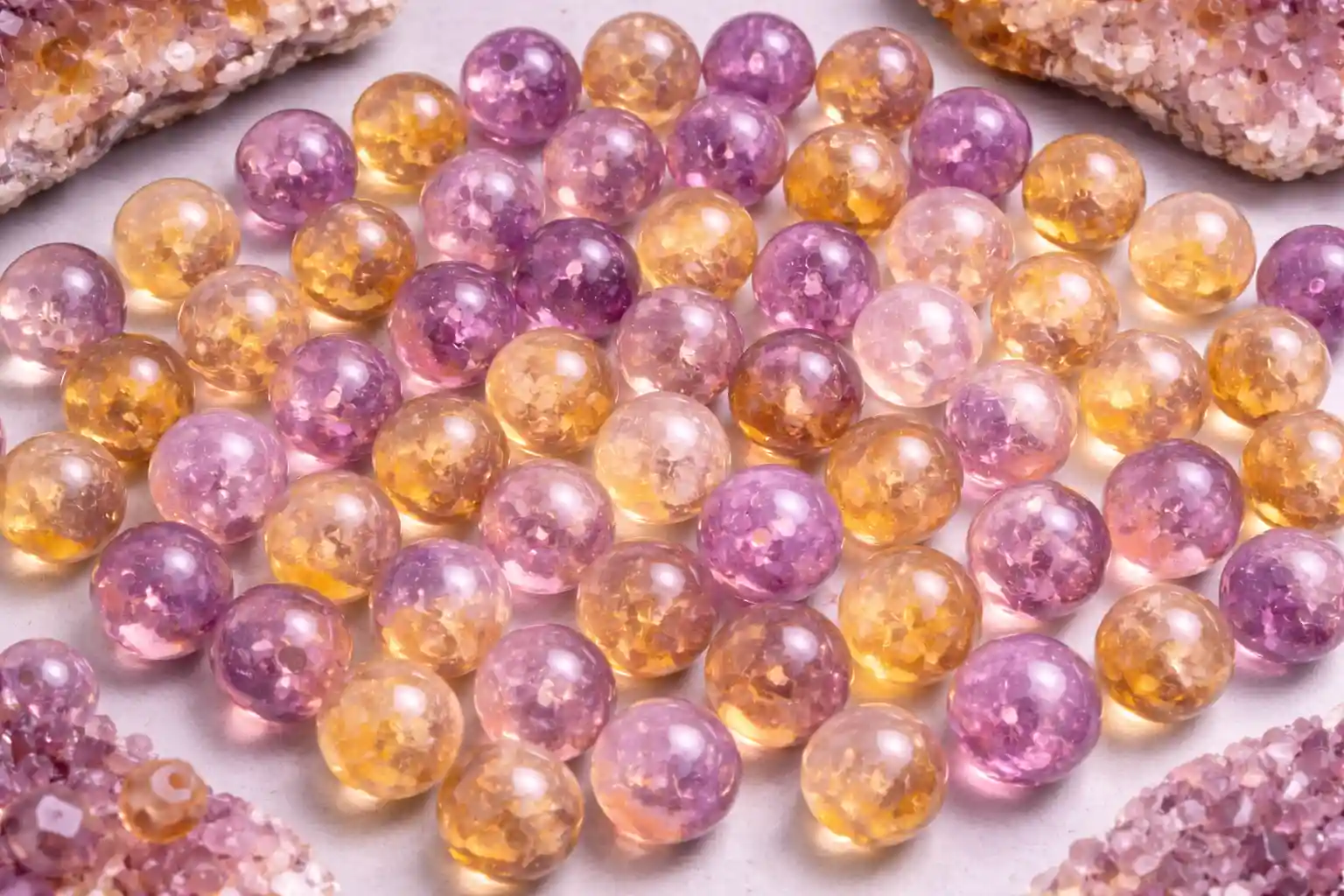
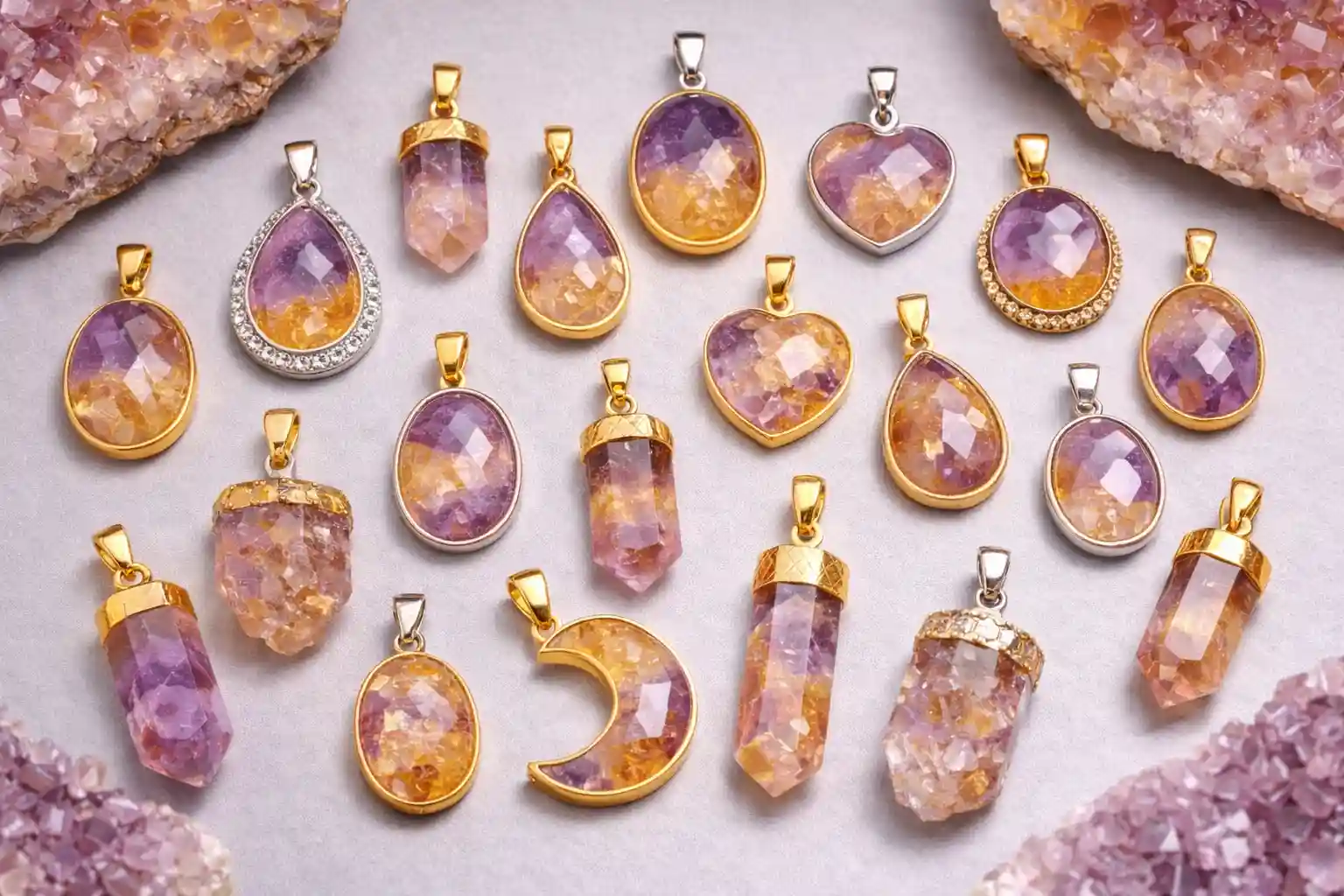
For design and merchandising, Ametrine meaning translates into one big advantage: instant visual contrast in a single stone. That bicolor “split” creates a built-in focal point, so even simple settings look premium—especially in Ametrine Jewelry lines built around gifts or statement pieces. It’s also practical: quartz is durable enough for most everyday styles, and ametrine is available in many cuts, beads, and matched pairs when sourcing is done carefully. The key is consistent zoning that photographs true-to-life.
Ametrine Ring: durability, setting choices, and return-proof notes
In Ametrine Ring designs, Ametrine meaning meets everyday wear concerns. Quartz is about Mohs 7, so it’s generally suitable for rings, but protection matters—especially for large stones or sharp corners. Recommend bezel or partial-bezel settings for daily wear, and use delicate prongs for occasional statement pieces. For wholesale, request face-up photos that clearly show the split, since ring buyers are sensitive to “not as pictured.” A crisp zoning line and balanced saturation help reduce returns.
Ametrine Necklace: pendants, calibrated stones, and color display
For pendants and Ametrine Necklace styles, Ametrine meaning is mostly about display: you want the bicolor zoning to read clearly at arm’s length. Oval, emerald-cut, and pear shapes often show the split beautifully when the cutter orients the rough correctly. If you sell semi-mounts or build repeatable SKUs, calibrated sizes matter—small deviations can cause setting issues and delays. In wholesale, confirm size tolerance, face-up orientation, and the preferred color ratio (more purple, more gold, or near 50/50) before production.
Photography tips for bicolor stones (reduce “not as pictured” claims)
Because bicolor gems change under different lighting, Ametrine meaning can get undermined by photo surprises. Use a simple, repeatable setup: one neutral daylight shot, one warm indoor shot, and at least two angles (straight-on and slight tilt) so the zoning line is obvious. Avoid heavy filters that shift purple into blue or push yellow into orange. For wholesale approvals, ask suppliers to include a white balance reference or a plain white background, plus a short video pan if possible. Clear photos reduce returns more than any sales copy.
Ametrine Price: What Actually Drives Cost
The biggest price levers: color split, saturation, separation, clarity
When buyers ask about Ametrine meaning, price is usually the next question—because two stones that “look similar” can cost very different amounts. The biggest drivers are the color split ratio (balanced zoning often commands a premium), saturation (rich purple and bright gold), and separation (a clean, readable boundary instead of muddy blending). Clarity also matters: eye-clean material with strong contrast sells faster in jewelry. Finally, consistency across a parcel or strand can raise wholesale value because it supports repeatable SKUs.
Cut orientation: why the same rough can look “better” or “worse”
Even with identical rough, Ametrine meaning changes at the bench because cutters decide how the color zones will face up. If the stone is oriented to place the boundary line across the table, you get that crisp two-tone “wow” effect buyers pay for. If it’s oriented poorly, the colors can blend into a dull middle tone or one color dominates, making the gem look less distinctive. This is why well-cut ametrine can price higher than similar-sized stones from the same parcel—cutting is part geology, part artistry.
Wholesale logic: parcel consistency, calibration, yield, and MOQ
For wholesale, Ametrine meaning becomes a business question: can you sell a line consistently without remakes and returns? Parcels with tight zoning and saturation usually cost more because they save time in sorting, matching, and photography. Calibration affects price too—setting-ready sizes reduce production friction. Yield matters because chasing perfect 50/50 splits can waste rough, so premium face-up stones may come from lower-yield cuts. MOQ and lead time also shift per-unit cost, so align specs with your target margin.
CTA #2: Share your target spec, get a tiered quote
If you’re pricing a line, Ametrine meaning should translate into clear specs we can quote: shape, size (or bead mm + hole size), target color ratio, clarity level, and whether you need matched pairs or consistent strands. Send those details on WhatsApp for a fast, tiered quote (entry/mid/premium options), or use our inquiry form if you prefer a written RFQ with photos, availability, and lead times. The more specific your zoning and calibration requirements, the easier it is to lock in consistent reorders.
Real vs Fake: Natural, Treated, and Lab-Created Ametrine
Quick visual tells: clean zoning vs muddy blends (and limitations)
When you’re verifying a lot, Ametrine meaning should match a real bicolor structure—not a “painted-on” look. In many natural stones, you’ll see distinct zoning that looks integrated into the crystal, with a believable transition line and consistent transparency across both colors. Be cautious of pieces where purple and yellow look overly uniform, overly neon, or strangely surface-level. That said, visuals aren’t foolproof: cutting style, lighting, and treatments can mislead, so use photos, videos, and disclosure together.
Common “fake” scenarios buyers encounter (mislabeling, composites, glass)
In the market, Ametrine meaning gets distorted most often through mislabeling rather than obvious costume fakes. Some sellers list “ametrine” for any purple-yellow quartz, even when the color is heavily enhanced or the zoning is not natural. You’ll also encounter composites (materials combined to imitate a bicolor look) and inexpensive glass imitations marketed to beginners. For wholesale buyers, the best defense is a consistent supplier process: ask how the color was achieved, request lot photos under neutral light, and avoid vague descriptions like “natural look” without disclosure.
What paperwork to ask for (treatment disclosure, lab memo when needed)
To keep Ametrine meaning credible on your own listings, request documentation that matches your risk level. For everyday commercial jewelry, a written treatment disclosure from the supplier is often the most practical baseline. For higher-ticket stones, matched pairs, or influencer-facing launches, consider asking for a gem lab memo or third-party verification—especially if the stone’s origin or “natural” status is central to your marketing. Just as important: keep your internal records (photos, lot IDs, and the supplier’s statements) so you can resolve customer disputes quickly.
A buyer-safe way to word authenticity on listings
A simple way to protect trust is to write Ametrine meaning descriptions that separate facts from beliefs. Use factual lines like “bicolor quartz with purple and golden zones” and “each stone shows natural variation in zoning.” If you can’t confirm origin, avoid absolute statements like “only from X mine,” and don’t imply medical outcomes. For authenticity language, choose clear wording such as “natural ametrine (per supplier disclosure)” or “lab-created ametrine” when applicable. This style reads professional, reduces chargebacks, and keeps your catalog consistent across platforms.
Ametrine Quality Checklist: Grading That Matches Buyer Expectations
Color balance and zoning line: what “good” looks like by grade
When you grade lots, Ametrine meaning becomes visual standards you can repeat. Entry-grade material often has lighter saturation or a softer transition line, which can still work for budget beads and casual jewelry. Mid-grade usually shows stronger contrast and a clearer split that photographs well. Premium-grade is where you see rich purple plus bright gold, a clean boundary, and an attractive face-up layout with minimal dead zones. Decide your target grade by SKU: statement rings and pendants typically need higher contrast than mixed strands.
Clarity and inclusions: acceptable ranges for retail vs wholesale lots
For clarity decisions, Ametrine meaning should align with the customer’s viewing distance and price point. In retail rings and pendants, “eye-clean” stones (no obvious inclusions at normal viewing) usually perform best because buyers expect a crisp bicolor look. In wholesale parcels or bead strands, small inclusions can be acceptable if they don’t cloud the color zones or weaken durability. When you describe clarity, keep it consistent: note whether inclusions are visible face-up, whether they interrupt the zoning line, and whether the overall transparency stays bright under neutral light.
Cut, shape, and calibration: what matters for rings vs necklaces vs beads
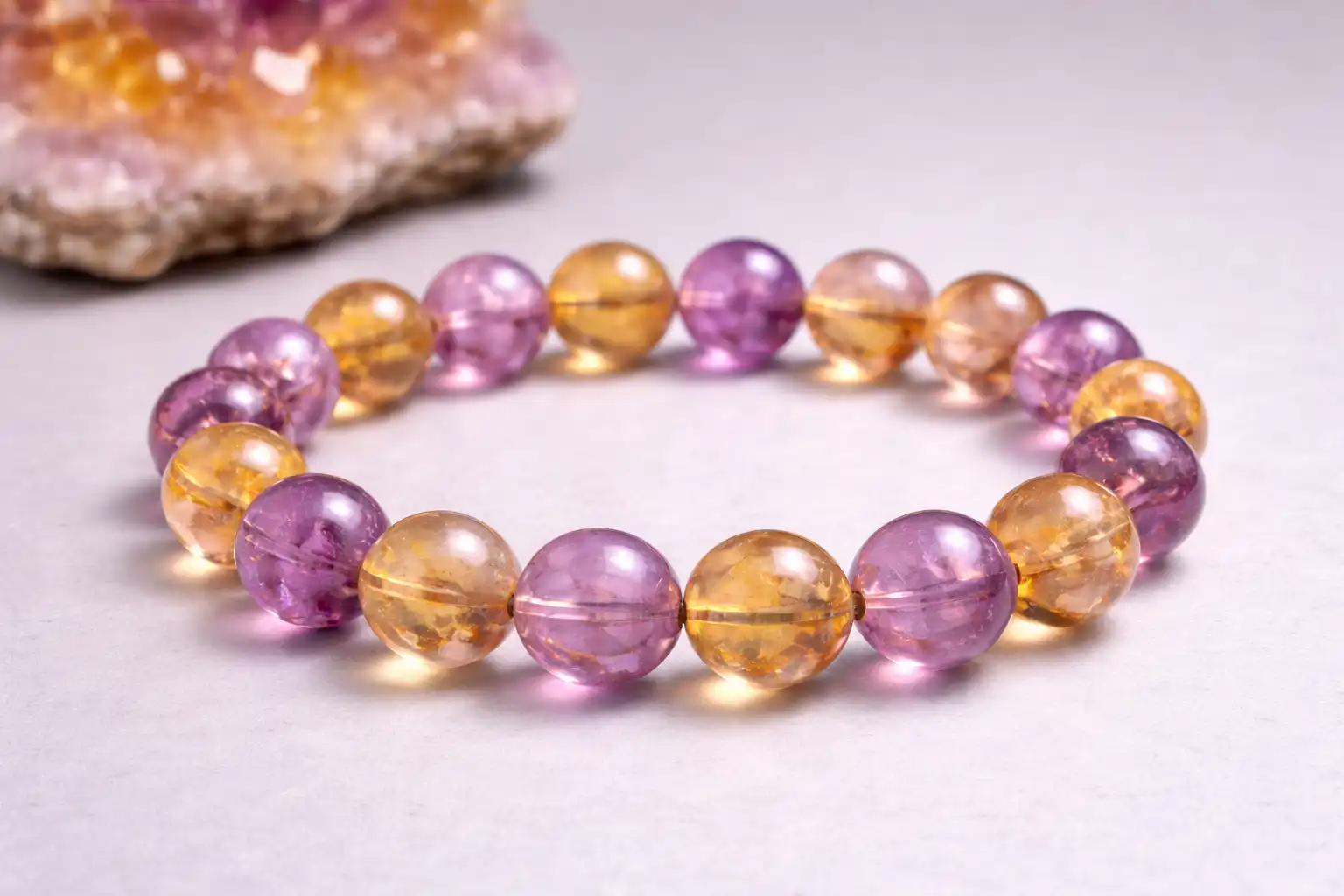
Cut and sizing choices affect how Ametrine meaning shows up in finished products. For an Ametrine Ring, prioritize sturdy shapes (oval, cushion, emerald cut) and confirm face-up orientation so the split is visible on the finger. For an Ametrine Necklace pendant, larger tables and longer shapes can display zoning beautifully at a distance. For an ametrine bracelet, calibration is everything: tight bead mm ranges, consistent hole size, and strand-to-strand color matching matter more than a perfect single “hero” stone.
Incoming QC mini-SOP (how to check a parcel fast)
A quick receiving process keeps Ametrine meaning consistent across every shipment. First, check the lot under neutral light and sort by color ratio (purple-heavy, balanced, gold-heavy). Next, spot-check clarity and transparency—look for haze that dulls contrast. Then verify measurements and tolerances (calibration or bead mm, plus hole size for strands). Finally, compare a few pieces to the supplier’s approval photos so you can flag mismatches immediately. Document the lot with one flat-lay photo and a short video pan before you break it down into SKUs.
Care, Handling, and Shipping to Reduce Returns
Care basics: cleaning, storage, sunlight/heat notes (practical, no fear)
For customers, Ametrine meaning shouldn’t come with complicated care rules. Ametrine is quartz, so normal jewelry care works: clean with mild soap, warm water, and a soft brush, then dry with a lint-free cloth. Store pieces separately to avoid scratches from harder gems or metal edges. For color longevity, advise against long, repeated exposure to strong heat or direct sun for extended periods—especially for display pieces left on a window ledge. A simple care card in the package can cut return requests dramatically.
Packing and shipping tips for stones, jewelry, and bead strands
In shipping, Ametrine meaning is protected by preventing friction and impact. For loose stones, wrap each piece individually and separate them with soft padding so facets don’t rub. For finished jewelry, immobilize the item so the stone doesn’t bang against metal components during transit. For strands, secure both ends and coil the strand in a way that avoids tight bends near the holes—this reduces chipping around drill points. Include a quick “open and inspect under neutral light” note for wholesale customers, so any issues are documented immediately.
Wholesale Selection and QC Experience (No Health Claims)
How we select lots: balancing color split, clarity, and consistency
In wholesale selection, Ametrine meaning becomes a practical sorting decision: we choose zoning that fits your product, not an abstract “perfect” ratio. For jewelry stones, we prioritize face-up contrast and eye-clean clarity because it photographs and merchandises better. For bead strands, we focus on consistency along the full length—steady saturation, predictable mixes, and clean drill quality—since mismatches trigger complaints. We also separate lots by color bias (purple-forward vs gold-forward) so you can build collections intentionally and reorder with less variation.
How we avoid disputes: photo standards + batch matching rules
To reduce disputes, Ametrine meaning has to match what customers see online. We approve lots using neutral-light photos plus at least one alternate angle that clearly shows the zoning line. For matched pairs or calibrated sets, we apply simple batch rules: similar saturation, similar split style (sharp vs blended), and comparable transparency. For strands, we photograph the full strand laid flat so the distribution is obvious. These basics prevent “the color is different” claims and make repeat wholesale orders smoother.
Wholesale Inquiry: RFQ Checklist + Next Step
RFQ checklist buyers can copy/paste (sizes, shapes, zoning ratio, tolerance)
To turn Ametrine meaning into a clean quote, send an RFQ with clear copy/paste specs: product type (loose stones, matched pairs, or strands), shape (oval/emerald/pear or bead), target size (mm or calibrated), and tolerance. Add your preferred color ratio (purple-heavy, gold-heavy, or near 50/50), zoning style (sharp line or softer blend), and clarity target (eye-clean or commercial). For beads, include strand length, bead count, hole size, and whether multi-strand matching is required. This speeds pricing and cuts revisions.
CTA #3: Send your spec on WhatsApp or the inquiry form
If you’re ready to source, Ametrine meaning should end with a simple next step: send your target specs and we’ll match you with available lots. Message us on WhatsApp for the quickest response (we can share current parcel/strand photos and recommend grade options), or submit your requirements through our inquiry form if you prefer a formal RFQ with quoted tiers, lead time, and packing details. If you’re unsure about zoning or calibration, tell us your product type and budget—we’ll suggest the most stable specs for repeat reorders.
Accuracy & sourcing note
To keep Ametrine meaning buyer-accurate, we base this guide on standard gemology references and trade practices (identification basics, common disclosures, and jewelry suitability). Metaphysical terms are included only as cultural traditions and personal beliefs—not as medical advice or guaranteed outcomes. For wholesale orders, we recommend clear treatment disclosure, consistent lot photos under neutral light, and documented specs (size tolerance, color zoning preference, and matching rules) to reduce “not as pictured” disputes.
External references & standards (add as outbound links)
- Gemological Institute of America (GIA) — ametrine overview and identification basics
- Gem-A (Gemmological Association of Great Britain) — quartz/amethyst/citrine reference info
- Mindat — locality and mineral data for quartz varieties
- U.S. FTC Jewelry Guides — best practices for gemstone treatment/disclosure wording
FAQ
What is the simplest way to explain ametrine’s meaning to customers?
For most shoppers, Ametrine meaning is easiest to explain through its look: one quartz crystal showing two natural color zones—purple and golden—often associated with balance and seeing situations clearly. In a listing or sales conversation, keep it visual and practical: “bicolor quartz with unique zoning, so every piece is one-of-a-kind.” If you want to add symbolism, frame it as a common association, not a guarantee, and avoid medical-style promises.
How do you pronounce ametrine?
Most American buyers say AM-uh-treen (the last syllable sounds like “green”). You’ll also hear a shorter AM-uh-trin in casual retail settings, but “AM-uh-treen” is the clearest, most widely understood option for product videos and customer calls. If you sell online, adding a small phonetic note in your description can prevent confusion—especially for first-time gemstone shoppers who may hesitate to ask out loud.
What affects ametrine price the most?
Ametrine price is driven less by size and more by how attractive the bicolor look is face-up. The biggest factors are color balance (many buyers prefer near 50/50), saturation (rich purple plus bright gold), and a clean, readable separation line instead of muddy blending. Clarity matters because haze can dull contrast. Cut orientation also plays a big role—good cutters position the zoning so both colors show clearly. In wholesale, consistent parcels or matched strands often cost more because they’re faster to sell and easier to reorder.
What are the most popular ametrine uses in jewelry and gifts?
In everyday shopping, Ametrine meaning connects best when you tie it to practical, giftable products. The most popular ametrine uses are in statement rings and pendants where the two-tone split is obvious, plus bead strands for bracelets and earrings where color zoning adds visual interest without extra stones. For gifting, buyers like it because it feels rare and “special” while still wearable. If you’re writing product copy, mention both symbolism and function—this is where ametrine meaning and uses naturally fit together.
What should I look for when buying ametrine jewelry online?
With Ametrine Jewelry, the most important thing is whether the photos match the stone’s real face-up look. Ask for at least one neutral-light photo and a second angle, because bicolor zoning can shift under warm indoor lighting. Look for strong contrast between the purple and golden zones, a clean boundary (or a clearly intentional blend), and good transparency without hazy areas. For rings and pendants, confirm the zoning is oriented to show both colors on the front, not hidden on the sides.
Is ametrine good for rings, or is it too fragile?
An Ametrine Ring can be a solid choice because ametrine is quartz and generally durable for regular jewelry wear. The key is smart design: bezel or partial-bezel settings protect the edges, and sturdy shapes like oval, cushion, or emerald cuts hold up better than stones with sharp points. If the ring is meant for daily wear, advise basic care—remove it for heavy lifting, gym workouts, or harsh chemicals. Most “damage” complaints come from knocks on corners or abrasion from rough surfaces, not from the stone being inherently weak.
What’s a good choice for necklaces or bracelets?
For an Ametrine Necklace, pendants in oval, pear, and emerald cuts are popular because they display the zoning clearly at a distance and layer well with other pieces. For an ametrine bracelet, bead strands are the most common option, but quality depends on matching—consistent bead size, clean drill holes, and a predictable color mix across the strand. If you’re buying for a collection, decide whether you want a “natural mixed” look or a tighter, premium match, and choose suppliers who can show full-strand photos under neutral light.
Does ametrine have chakra associations or “crystal benefits”?
Some customers connect Ametrine meaning to spiritual traditions and describe Ametrine chakra associations with the crown and solar plexus. You may also see Ametrine crystal benefits described in terms of focus, balance, or a calmer mindset. It’s best to frame these as personal beliefs rather than medical facts, and avoid claims about treating anxiety, depression, pain, sleep disorders, or any health condition. A safe approach is: “Many people use it in meditation or mindfulness routines,” while keeping your core product value focused on color, craftsmanship, and quality.
Conclusion
Whether you’re buying one piece for a gift or building a repeatable line for retail, Ametrine meaning comes down to two things that matter in the real world: the bicolor look and the standards behind it. The best results come from clear zoning, strong saturation, and consistent lots that photograph accurately—plus straightforward disclosure if a stone is treated or lab-created. If you’re sourcing for production, use the RFQ checklist above, approve with neutral-light photos, and match specs to your SKU (rings, necklaces, or bracelets). For current availability and tiered wholesale options, reach out on WhatsApp or send your request through our inquiry form.